
Most research projects start with a question. WoodVALOR starts with a pile of wood that nobody knows what to do with.
Europe produces about 20.5 million tonnes of contaminated post-consumer wood waste each year. This waste comes from demolished buildings, old mines, discarded furniture, and industrial structures that have reached the end of their life. The wood contains arsenic, chromium, copper, creosote, and other substances that prevent it from being recycled in the usual ways. As a result, most of it is burned. Incineration releases between 400 and 1,000 kg of CO₂ equivalent per tonne, and the valuable cellulose, hemicellulose, and lignin inside—key ingredients for paints, adhesives, and coatings—are lost as well.
WoodVALOR is a three-year EU-funded research project trying to find a better route. The science behind it is organised into seven work packages, each tackling a specific part of the problem. Here’s what each one is doing and why it matters.
WP1: Sorting and cleaning the wood
Everything starts here. Before any chemistry can happen, the contaminated wood has to be sorted and cleaned — and that turns out to be harder than it sounds.
Wood arriving at a processing facility isn’t uniform. A timber beam from a mine looks nothing like a flat-pack wardrobe or a demolished floorboard, and they carry different contaminants at different concentrations. Treating them the same way is a recipe for wasted effort or, worse, downstream products that carry hazardous residuals.
WP1 is developing an AI-powered sorting system that uses deep learning and multi-angle imaging to classify wood waste in real time on conveyor belts. The model is trained on visual and chemical data — surface texture, colour, coating profiles, and pollutant concentrations — and assigns a grade that determines what treatment the wood receives next.
From there, the decontamination process matches the contamination level. Lightly contaminated Grade A wood goes through pressurised hot water extraction. Grades B and C require more intensive treatment: acid extractions with sulfuric acid at controlled temperatures achieve more than 98% copper solubilisation from CCA-treated timber. Chelating agents pull out remaining heavy metals. The target across all grades is greater than 90% contaminant removal before anything moves to the next stage.
Even wastewater isn’t discarded. An activated biochar system adsorbs heavy metals from the liquid waste streams, which are chemically recovered and precipitated. Any remaining organic contaminants are detoxified using specialised fungal and bacterial consortia. The brief for WP1 is zero waste — nothing hazardous leaving the process untreated.
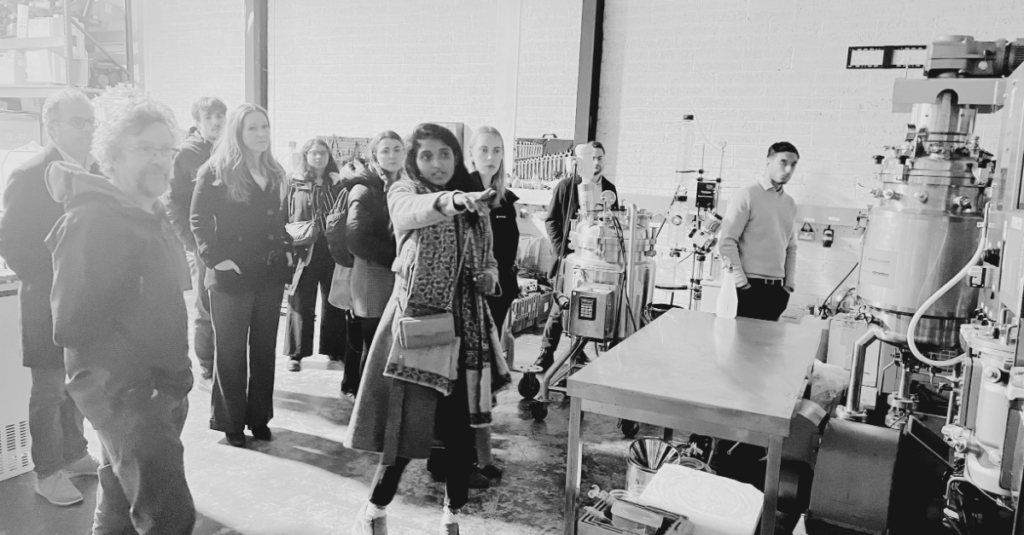
Once decontaminated, the wood is fractionated into lignin, cellulose, and hemicellulose using a chemo-enzymatic approach combining laccase treatment with alkali and acid prehydrolysis, with recovery yields targeting up to 80% for each fraction.
WP2: Making intermediates from the fractions
With three clean fractions in hand, WP2 converts them into the chemical intermediates that downstream processes need.
Cellulose — the glucose-rich structural component — goes through enzymatic or hydrothermal saccharification to produce sugar hydrolysates. These are then fermented using specially adapted bacterial strains to produce lactic acid at 80% yield at 100-litre scale, under non-sterile conditions. That matters commercially: sterile fermentation is expensive to maintain at scale. Getting it to work without it is one of the technical advances WP2 is working to demonstrate.
Lignin takes a different route. Hydrothermal liquefaction at elevated temperatures and pressures converts it into phenolic monomers — catechols and guaiacols — that serve as starting materials for bio-based resins and coatings ingredients. Solid residues that can’t be efficiently liquefied are converted into biochar instead via hydrothermal carbonisation at milder conditions.
Both the lactic acid and the phenolic streams move forward to WP3 for final conversion. WP2’s job is to get them there in a form clean enough and concentrated enough to be useful.
WP3: Converting intermediates into industrial ingredients
WP3 is where the wood fractions become recognisable paint ingredients.
Lactic acid undergoes catalytic dehydration to acrylic acid — the core monomer in water-based paint binders, adhesives, and sealants. The dehydration uses mixed phosphate catalysts with tightly controlled surface acidity and basicity ratios, targeting more than 70% acrylate ester yield. The same lactic acid stream can also be esterified with various alcohols first, then dehydrated — a two-step route that opens up a broader range of acrylate products.
Fatty acids come from a separate fermentation track. Oleaginous yeasts — particularly Yarrowia lipolytica — convert the glucose-rich hydrolysates into lipids at 100-litre scale, reaching titers of 10–30 g/L. The lipids are extracted and converted to fatty acids through membrane filtration and solvent extraction. Oleic, linoleic, and palmitic acids account for the majority of the output, all of which have direct uses in alkyd resins and surfactants.
Hemicellulose becomes binders and emulsifiers. Its natural amphiphilic structure makes it useful at the oil-water interface in paint emulsions, and controlled grafting with phenolics and fatty acids produces formulation-ready components that can substitute for petrochemical equivalents. Target yield for this step is 90%.
Biopigments come from yet another fermentation route: red yeasts grown on wood hydrolysates produce pigment precursors that, combined with Spirulina-derived colorants, can deliver a full trichromatic range — blue, yellow, and red — at 95% purity and industrial colour fastness.
Finally, the remaining solid residues are pyrolysed into biochar. WP3 optimises pyrolysis conditions — residence times of 10–20 minutes — to produce material that meets specification for soil amendment applications, with contamination safely managed through the earlier decontamination stages.
WP4: Making products that actually work in industry
Having bio-based ingredients is one thing. Having bio-based ingredients that perform well enough for a commercial paint manufacturer to use is another.
WP4 bridges that gap. It takes the outputs of WP3 and turns them into market-ready products: latex emulsions, industrial coatings, adhesives, sealants, and biochar-amended soils. Each product type goes through a different validation track.
For paints and coatings, bio-based acrylate esters are added to emulsion polymer formulations and tested against commercial standards for stability, viscosity, particle size, and thermal behavior. After these tests, industrial partners carry out external validation to identify any barriers to adoption and to confirm regulatory compliance. The goal is to achieve formulations with more than 90% monomer conversion yields.
Adhesives and sealants go through more rigorous testing: substrate-specific adhesion tests, accelerated stability under stress conditions, and full ISO certification procedures covering mechanical properties, durability, and environmental resistance.
Biochar gets its own validation track through controlled greenhouse trials across 40 mesocosms, comparing biochar from different sources and nitrogen fertilisation strategies in timothy grass and red clover cultivation. Weekly greenhouse gas monitoring alongside pre- and post-treatment soil analysis quantifies improvements in fertility, carbon sequestration, and agricultural viability. The target is greater than 30% improvement in soil fertility in mining-affected land.
WP5: Checking whether it all makes sense
Technical performance is only part of the picture. WP5 asks the harder questions: is this actually better than what it replaces, and is it commercially viable?
The work package integrates five assessment frameworks — life cycle assessment, techno-economic analysis, risk assessment, social life cycle assessment, and regulatory analysis — into a single Decision Support System. That system models different value chain configurations, tracking primary energy use, climate impacts, resource efficiency, eco-toxicity, economic viability, and social acceptance simultaneously.
The regulatory piece is particularly important for WoodVALOR. Contaminated wood sits in a complex legal landscape — hazardous waste classifications, REACH restrictions on arsenic, creosote, and PCP, and the absence of EU-wide end-of-waste criteria for wood all create potential bottlenecks. WP5 maps this landscape, runs stakeholder workshops to identify where the barriers are most acute, and translates findings into policy recommendations.
The Safe and Sustainable by Design framework runs through all of this. Every processing decision is evaluated not just for whether it achieves the desired output, but for what it does with the hazardous inputs — ensuring that cleaning the wood doesn’t simply transfer the problem somewhere else.
WPs 6 and 7: Keeping it on track and getting the word out
WP6 handles dissemination, exploitation, and stakeholder engagement — conferences, webinars, a stakeholder advisory board, and the work you’re reading right now. WP7 manages coordination across 11 partners in 6 countries, tracking progress, managing data, and handling the administrative requirements of an EU-funded Research and Innovation Action.
Neither is glamorous. Both are essential.
What this adds up to
Seven work packages, each doing a specific job, each feeding into the next. Sort and clean the wood. Break it into fractions. Convert those fractions into chemistry. Validate that chemistry in real industrial products. Check that the whole thing makes environmental and economic sense. Communicate what’s been learned.
What makes WoodVALOR’s research approach distinctive isn’t any single work package — it’s the insistence that all seven hold together. Decontamination that produces clean fractions. Fractionation that delivers intermediates pure enough for catalysis. Catalysis that produces ingredients good enough for formulation. Formulation that meets commercial standards. Assessment that tracks all of it honestly.
The feedstock is waste wood that currently gets burned. The aim is to make it into something industry will actually pay for. That’s a harder engineering problem than it looks, and the project has until May 2028 to show it can be done.